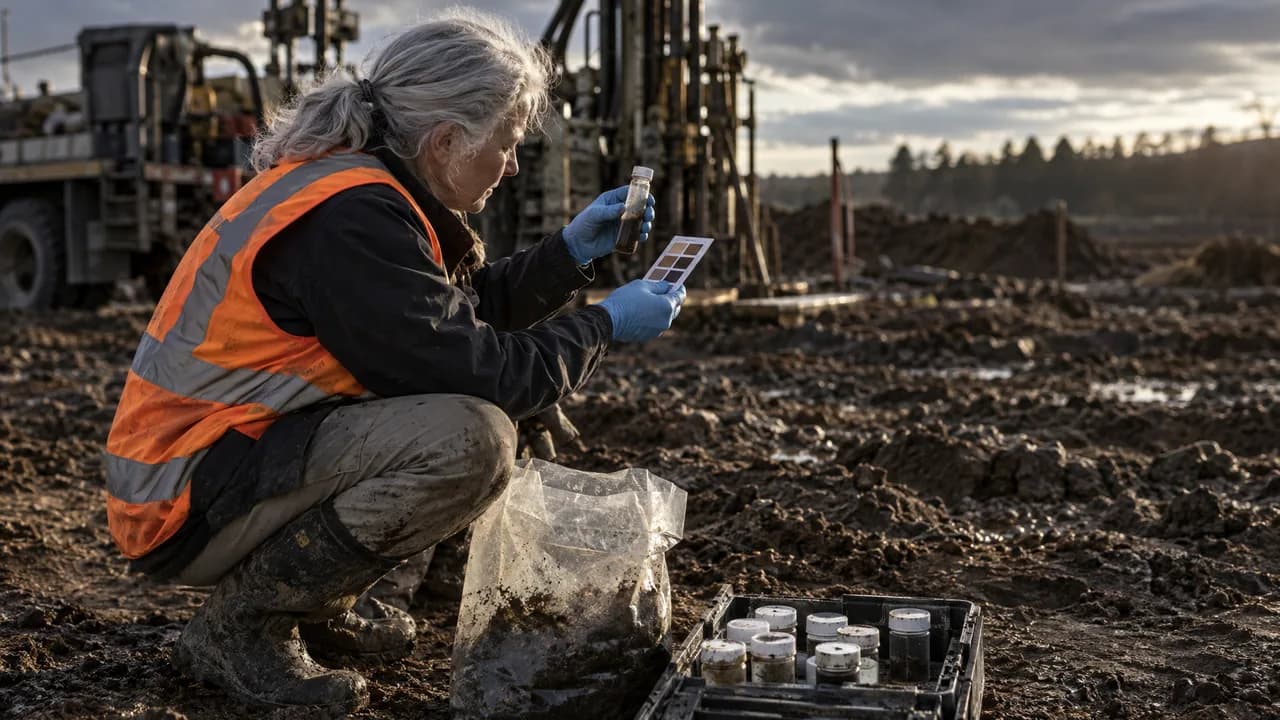
On-Site Well Water Testing for Petroleum Hydrocarbons
Use this guide to decide when on-site colorimetric sampling fits your private well and how to interpret hydrocarbon readings before taking action.
By the Hanby Environmental team
6 min read
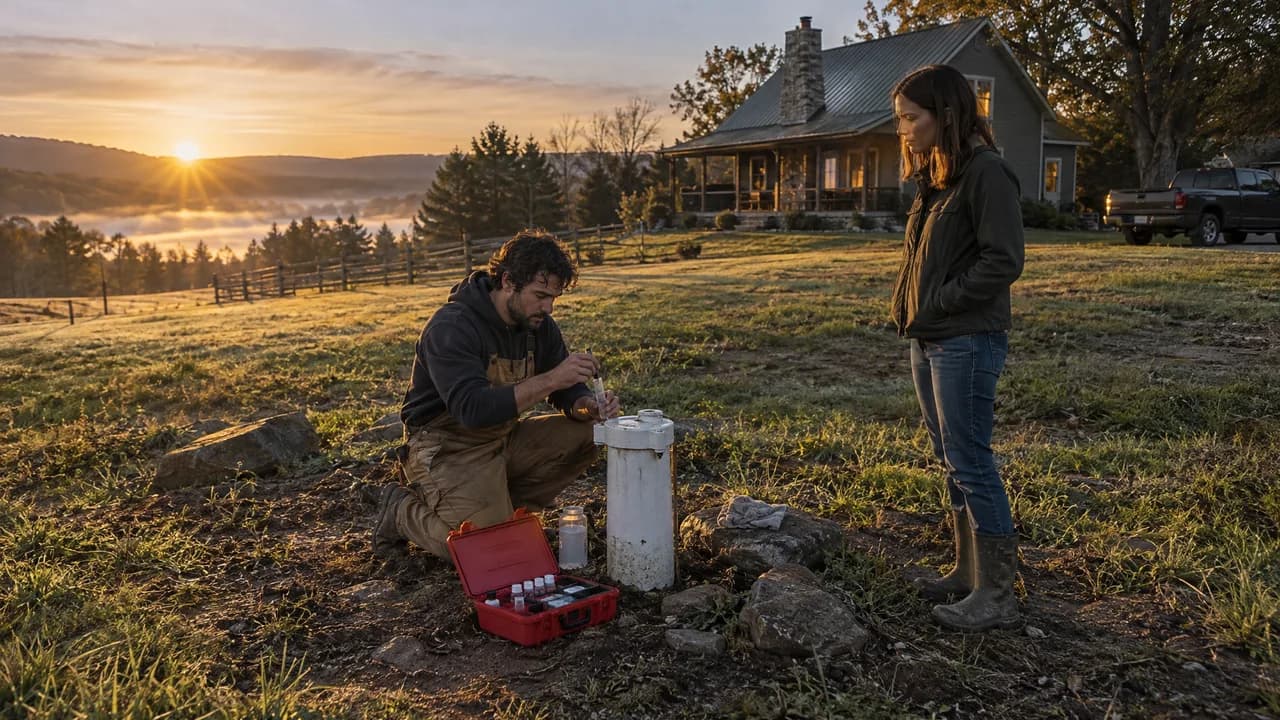
Testing private well water for petroleum hydrocarbons requires a field-portable colorimetric method that delivers quantitative and qualitative readings on site in five minutes. Homeowners on private wells should test for petroleum hydrocarbons on site and act on the reading quickly rather than wait for a lab result. Routine drinking water checks focus on bacteria and minerals, leaving fuel leaks, heating oil seepage, and nearby runoff undetected until taste or odor makes the problem obvious.
Waiting days for off-site laboratory turnaround leaves a household guessing while contaminated groundwater continues to move through the aquifer. Immediate field readings let you isolate the source, stop using affected taps, and document concentration levels while conditions are still clear.
Key Criteria for Evaluating On-Site Hydrocarbon Kits
Private water systems operate outside municipal monitoring networks, which puts the burden of detection directly on the owner. The U.S. Environmental Protection Agency states that around 15 percent of the U.S. population (over 43 million people) rely on private wells as their source of drinking water (epa.gov). When you evaluate a field kit for fuel or oil contamination, general water-quality strips will not tell you whether aromatic hydrocarbons are present.
Check these specific criteria before selecting a kit for on-site hydrocarbon detection:
- Target compound range: Verify that the method detects gasoline, diesel, crude oil, PCB's and other aromatic contaminants rather than only surface sheen.
- Detection threshold: Look for quantitative and qualitative analysis down to parts-per-billion for aromatic compounds so trace seepage is caught early.
- Turnaround time: Confirm that the kit delivers five-minute on-site soil or water test results, allowing you to take follow-up samples at different depths or tap points during the same visit.
- Reference tools: Check whether calibration photo books and a mobile application are available to match color readings consistently under field lighting.
- Matrix versatility: Determine whether the same methodology works for both water and surrounding soil, which matters if a surface spill or leaking tank is the suspected source.
Colorimetric field test kits for petroleum hydrocarbons in soil or water meet these criteria by focusing on chemical extraction rather than visual inspection alone. A clear glass of water can still carry dissolved aromatic compounds well below the threshold of smell.
How Colorimetric Extraction Identifies Fuel Contamination
Groundwater contamination is more common than many property owners assume. EPA reports that a U.S. Geological Survey study of 2,100 private wells found water from about one in five wells contained one or more contaminants at a concentration greater than a human-health benchmark for drinking water.[1] Understanding how a field test isolates petroleum compounds explains why on-site colorimetric readings are reliable enough to guide immediate action.
The patented Hanby colorimetric method was discovered in 1986 by John Hanby for petroleum hydrocarbon detection. The U.S. EPA has documented the methodology as an assessment, remediation-monitoring and leak-detector tool since 1990. Rather than relying on slow chromatographic separation in a distant facility, the field-portable colorimetric test method extracts aromatic compounds from the sample and provides immediate colorimetric identification of concentration and type.
- Collect a representative water sample directly from the wellhead or tap in a clean container, avoiding aeration that could strip volatile fuel components.
- Add the extraction solvent to the sample so dissolved aromatic hydrocarbons transfer out of the water phase and into the solvent layer.
- Introduce the catalyst reagent to trigger a Friedel-Crafts colorimetric reaction that binds the extracted aromatic rings into a distinct, visible color.
- Compare the resulting color intensity and hue against calibrated reference standards to identify both the petroleum type and its concentration level.
Different hydrocarbon structures produce distinct color signatures. Lighter refined fuels like gasoline react differently from heavier diesel or crude oil fractions, giving you both a qualitative type indication and a quantitative concentration estimate on the spot.
Deciding When to Sample Your Private Well
Public water utilities run scheduled compliance checks, but private wells have no such safety net. The CDC states that EPA rules protecting public drinking water systems do not apply to privately owned wells, and that government officials do not regulate, treat, or monitor tap water from private wells (cdc.gov). You have to decide both the routine schedule and the trigger events that call for immediate hydrocarbon sampling.
For general baseline maintenance, the New York State Department of Health advises testing your water at the tap at least once a year for bacteria and every 3-5 years for other contaminants (health.ny.gov). That baseline schedule is fine when site conditions are stable and no fuel sources sit nearby.
Shift immediately to on-site hydrocarbon sampling whenever site conditions change. A fuel delivery spill near the well casing, a leaking underground heating oil tank, nearby construction equipment refueling, or a sudden chemical odor at the faucet all call for a five-minute field check rather than a wait-and-see approach. If the reading shows elevated aromatic hydrocarbons, you know right away to switch to bottled water and investigate the source before the plume spreads further.
If your property also has stained ground or suspected surface seepage near the wellhead, testing the surrounding dirt alongside the water helps you trace the migration path. Catching a shallow diesel or gasoline leak in the soil before it reaches the water table saves far more time and expense than remediating a contaminated aquifer.
Field-Portable Kits Built for Fast On-Site Decisions
Hanby Environmental reduces dependence on off-site laboratory analysis by offering field-portable kits that provide five-minute results and parts-per-billion aromatic-compound detection. For private well owners and environmental professionals checking groundwater, the Hanby TPH Water Kit includes a set of 15 tests for sampling water directly at the site. When a suspected fuel leak involves surrounding ground or a spill zone, the Hanby TPH Soil Kit provides a matching set of 15 tests for soil sampling.
Companion calibration photo books, a mobile application, and an H.E.C.P. certification course are available to support accurate field interpretation. Having standardized visual references and training materials keeps readings consistent across repeated checks, whether you are monitoring a single residential well or tracking a remediation boundary across a larger property.
Before ordering, keep two practical logistics in mind. Pricing is provided by phone or email, and standard shipping and handling charges are for FedEx Ground only, so faster service requires contacting customer service. To request kit pricing, arrange expedited shipping, or discuss your sampling needs, reach out through our contact page or email info@hanbyenvironmental.com.
Frequently Asked Questions
What is the best way to test my well water?
The right method depends on what you are screening for and how fast you need an answer. For routine biological and mineral checks, the CDC recommends testing private well water at least once every year for total coliform bacteria, nitrates, total dissolved solids, and pH level.[2] When you suspect gasoline, diesel, crude oil, or other aromatic contaminants, an on-site colorimetric field test kit gives you qualitative and quantitative results in five minutes so you can act without waiting on off-site lab turnaround.
Where can I have my well water tested for free?
Free testing programs are not universally available because private wells are not regulated by federal drinking water rules. Some county health departments or local environmental agencies occasionally run free screening events for basic parameters like bacteria or nitrates, though these rarely cover petroleum hydrocarbons. Check directly with your local or county health department to see if a seasonal program is open in your area, and plan to use a dedicated on-site kit whenever you need immediate hydrocarbon readings.
Are you supposed to test well water?
Yes, private well owners are solely responsible for checking their own water quality because no government agency monitors private residential taps. State agencies set clear baseline intervals: for example, the Iowa Department of Natural Resources recommends testing private well water for bacteria and nitrate at least once per year, and for arsenic and manganese at least once (iowadnr.gov). Beyond annual checks, test immediately after flooding, well repairs, nearby fuel spills, or any noticeable change in taste, color, or odor.
Sources
- epa.gov
Around 15 percent of the U.S. population (over 43 million) rely on private wells as their source of drinking water.
- cdc.gov
Test your well water at least once every year for total coliform bacteria, nitrates, total dissolved solids, and pH level.
- iowadnr.gov
Nitrite - at least once per year if you have high nitrates.
- health.ny.gov
Test your water at the tap at least once a year for bacteria and every 3-5 years for the other contaminants listed to the right.
Sources checked on November 22, 2026.
Get new articles by email
New articles from Hanby Environmental, sent to your inbox.
By subscribing you agree to receive emails from Hanby Environmental about new articles. You can unsubscribe at any time.