How to Choose a Kit to Test Soil for Petroleum Contamination
Match a petroleum screening kit to the spill in front of you, sequence the field readings, and choose which jars deserve a lab order before the crew demobilizes.
By the Hanby Environmental team
5 min read
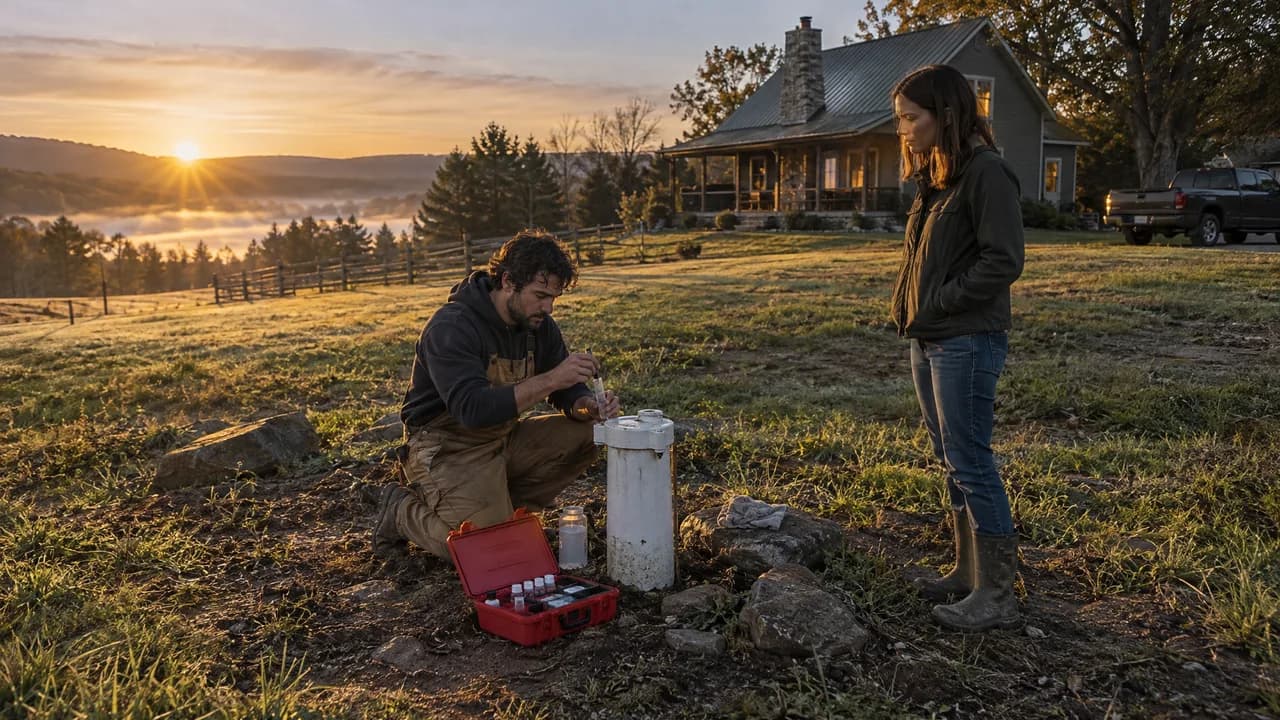
For petroleum contamination, the soil test kit worth buying is a field TPH kit that extracts hydrocarbons from the sample and gives a reading on site. A garden kit built for pH and nutrients is the wrong tool. The real job of that field kit is triage. A reading in hand tells you which of today's jars deserve a lab invoice and where the next sample should go, while the drill rig or excavator is still parked on site to act on it.
That changes how you should judge a kit. Throughput matters, and so does whether the reading tells you what product you are chasing. A screen that takes a day to interpret defeats its own purpose, because by then the crew has moved on and the boundary of the plume is still a guess.
Four Kinds of Soil Kits and the Question Each One Answers
Soil testing products fall into four groups, and only two of them help with a contamination question in the field. Sort a candidate by the question it can answer before you compare anything else.
| Kit type | Question it answers | Evidence to check before buying |
|---|---|---|
| Agronomic pH and nutrient kits | Is this soil good for growing? | Whether the box names any hydrocarbon at all. If it doesn't, it cannot screen a spill |
| Colorimetric field TPH kits | How much petroleum is in this sample, and roughly what type? | Named target products, the extraction step, a calibration reference for each product, time per test |
| Turbidimetric petroleum screens | Is total recoverable petroleum above a screening level? | Whether it follows a documented screening method, and what it reports beyond a single total |
| Fixed laboratory analysis | What is the defensible, reportable concentration? | Turnaround time, chain of custody, cost per sample |
On a contamination job, read the product sheet of an oil contaminated soil test kit for three things: which petroleum products it names, how long one test takes and what you compare the result against. A kit that lists gasoline, diesel and crude oil separately, with a reference for each, can help you tell sources apart. A kit that returns a bare "oil present" cannot help you size a dig.
None of this removes the laboratory. It changes what the lab receives. You send fewer jars, and each one is chosen because a field reading placed it at the edge of the plume or above your action level.
Running a Field Screen Before the Lab Order
The sequence below turns a field kit into a sampling plan. It applies just as well to working out how to test soil after a diesel spill as to a legacy site with mixed products.
- Name the suspected product from site history before you collect anything. Check whether it is gasoline from a dispenser line, diesel from a day tank, crude from a gathering line or PCB-bearing oil from old electrical equipment. That choice decides which calibration reference you will read against.
- Lay out sampling points that run from the presumed source outward, and include one location you expect to be clean as a background check on your technique.
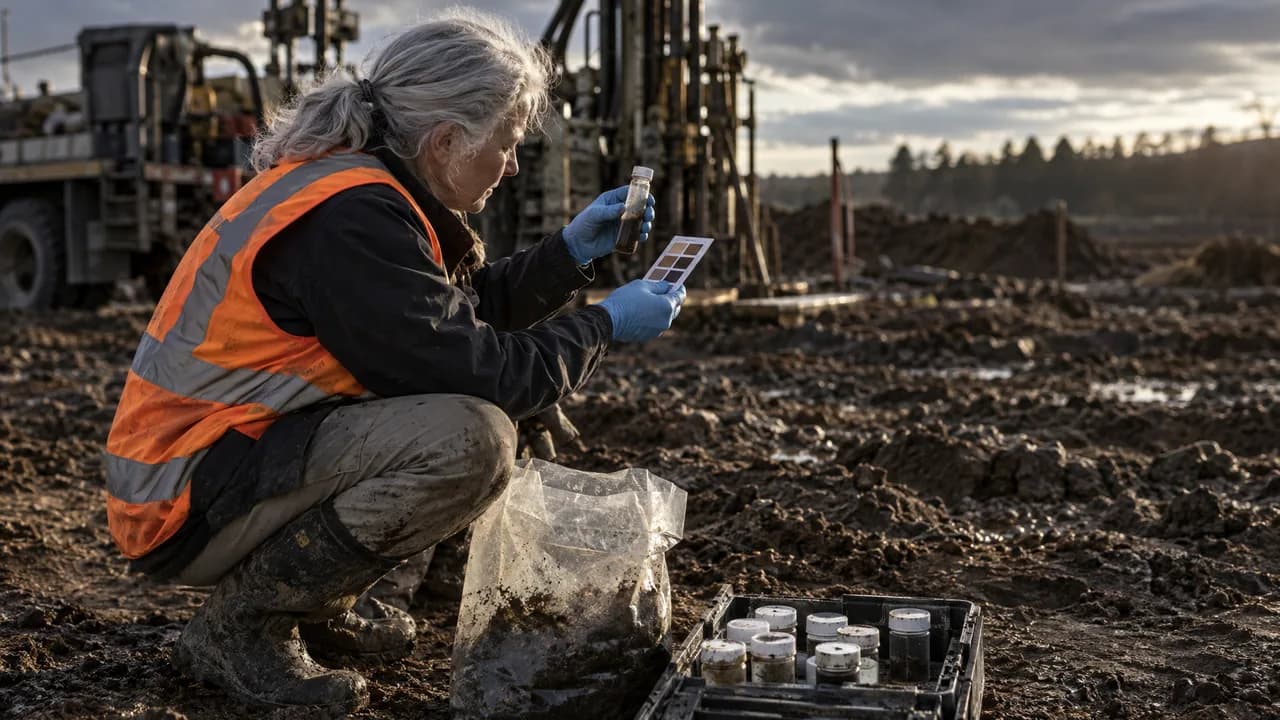
- Run each sample as soon as it comes out of the ground, and log the reading next to its location and depth.
- Move the next boring or the excavation face based on those readings while equipment is still mobilized.
- Pick the lab set last: the highest readings, the samples that define the clean boundary, and whatever your regulator requires for confirmation.
- Switch matrices when you hit groundwater. Run the water samples through the Hanby TPH Water Kit so soil and water readings come from the same method.
Volume is what makes this workable. In a field demonstration of the Hanby Test Kits, the U.S. Army Cold Regions Research and Engineering Laboratory distributed 90 soil and groundwater samples over a 2.5-day period for on-site TPH analysis. At that scale, screening and lab selection fit inside a single mobilization. Without it, you are stuck with a second trip.
What Happens Inside the Test Tube
Our test extracts aromatic compounds from the sample and provides immediate colorimetric identification of concentration and type. You read the color against a reference, and the color tells you both how much and what kind. Publications on the method cite a portable fiber-optics CCD spectrophotometer, and a mobile application is listed in our product directory. The method was discovered in 1986 by John Hanby.
A turbidimetric screen, the approach EPA Method 9074 (1998) describes for total recoverable petroleum hydrocarbons in soil, works from turbidity instead of color. A cloudiness reading sums up what came out of the sample. A color reading tied to the aromatic fraction, compared against a product-specific reference, adds a second piece of information. It shows whether your TPH soil result points toward a diesel source or a gasoline one, and that is the detail that steers the next excavation bucket.
That specificity comes with a condition. Your reference has to match the product in the ground. If you read a crude-oil sample against a gasoline reference, the number means little, and that is why the field sequence starts with site history and not with the shovel.
Our Hanby TPH Soil Kit packages that colorimetric extraction for soil samples. It detects gasoline, diesel, crude oil, PCB's and other aromatic contaminants. So a single kit covers the fuel release, the heating-oil tank and the transformer pad, as long as you read each one against the right reference.
Where Hanby Field Kits Fit a Contamination Job
Our kits are colorimetric field test kits for petroleum hydrocarbons in soil or water, built for on-site triage. The line splits by matrix into the Hanby TPH Soil Kit (FTKS) and the Hanby TPH Water Kit (FTKW), so a crew working a fuel oil release can move from soil borings to a monitoring well without changing methods.
Plan the purchase before the spill. Standard shipping and handling covers FedEx Ground only, and faster service means contacting customer service. A kit already in the truck is the one that saves the second mobilization. Pricing, including international pricing, is quoted by phone or email.
Reach us through our contact page or at info@hanbyenvironmental.com with your matrix, your suspected products and your expected sample count. You can also browse the full product and course line from our site map.
Sources
- permanent.access.gpo.gov
The turbidimetric approach in this method is designed to quickly screen soil samples using a system calibrated with a blank and a single calibration standard.
- coldregionsresearch.tpub.com
For this evaluation, 90 samples were distributed Here the accuracy, precision, and reliability of these over a 2.5-day period for on-site analysis and data technologies are evaluated.
Sources checked on November 22, 2026.
Get new articles by email
New articles from Hanby Environmental, sent to your inbox.
By subscribing you agree to receive emails from Hanby Environmental about new articles. You can unsubscribe at any time.